Annual event focuses on higher added value
HASSELT – POM Limburg is developing a new Business District at the Health Campus in Diepenbeek. The first phase will comprise approximately 7,500 m² and is estimated to require an investment of €20 million. POM Limburg is announcing the plans at its annual event, where the further development of Limburg’s campuses and the ambition to create more added value take centre stage.
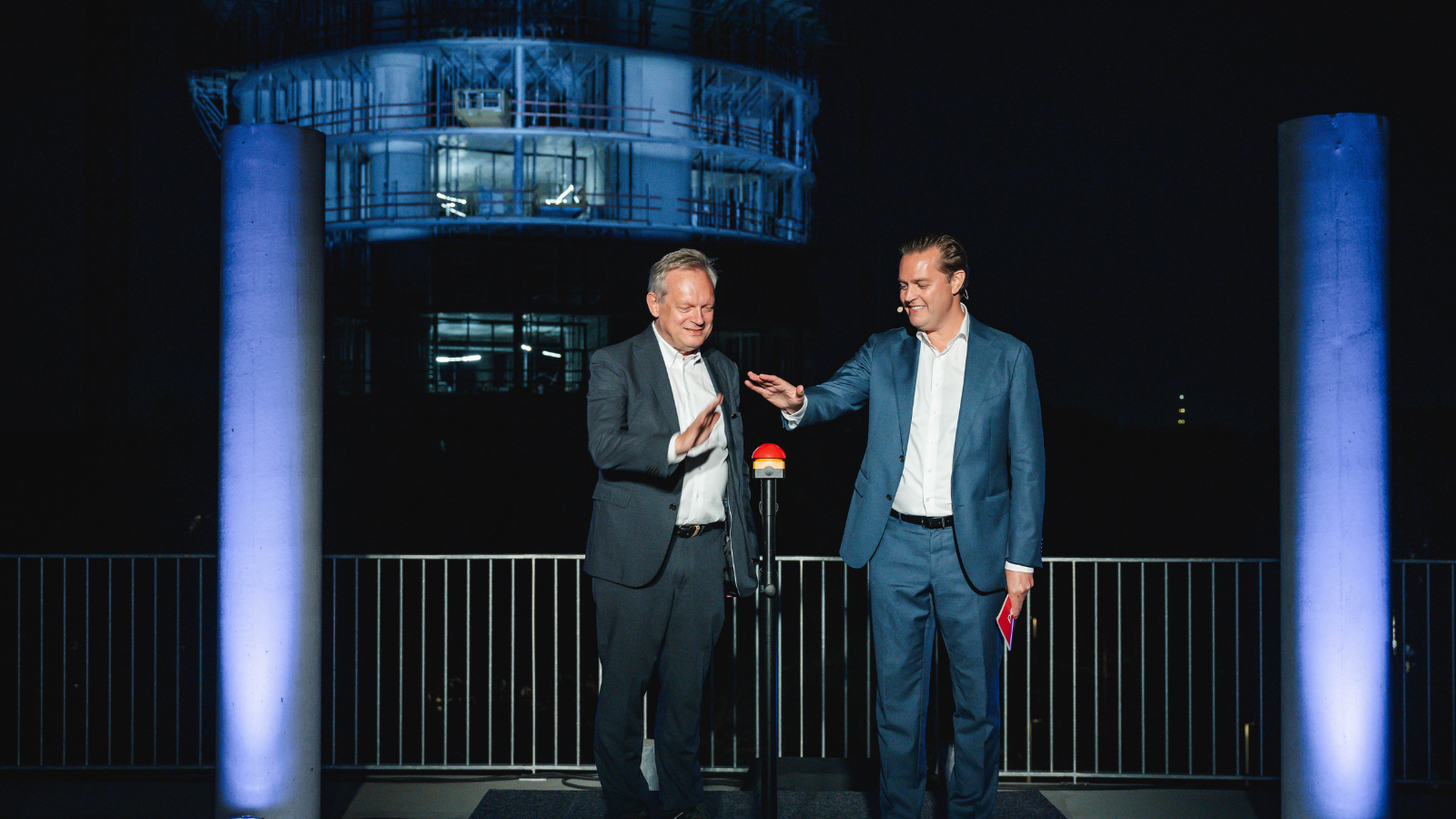
The setting for POM Limburg’s annual event was not chosen by chance. Entrepreneurs, knowledge institutions and public authorities will gather on Tuesday 6 October in the recently opened parking facility at Limburg DC in Diepenbeek, where the investments of recent years are becoming increasingly visible. The annual event will focus on Limburg’s economic future, with attention to added value, innovation, Big Science and the further development of the campuses.
The economic future is taking shape
The campuses play an important role in POM Limburg’s economic strategy. With the Health Campus and Bouwcampus in Diepenbeek and the Logistieke Campus in Genk, POM Limburg is building ecosystems around sectors in which the province sees opportunities for economic and technological growth.
At Limburg DC, the Health Campus’s new open innovation centre is taking shape and is due for completion by the end of 2027. Nearby, the Bouwcampus is also steadily taking shape, with its opening scheduled for early 2028. Meanwhile, construction of the Logistieke Campus Limburg is under way on the former Ford site in Genk. Completion is scheduled for the summer of 2028.
‘These campuses are not about the bricks themselves, but about what those bricks set in motion’, says Noël Slangen, Managing Director of POM Limburg. ‘When you bring science, education and businesses together, researchers and entrepreneurs find each other more quickly and ideas have more opportunities to develop into applications and business activity. Ultimately, that is what these investments are all about.’
New room for growth at Health Campus
Meanwhile, the Health Campus is already taking the next step. POM Limburg is developing a new Business District there for life sciences companies that have outgrown BioVille and for larger companies looking to establish themselves on the campus. The first phase will comprise approximately 7,500 m² and is estimated to require an investment of €20 million. In time, the Business District could grow to around 15,000 m², with space for offices, research and specialised laboratories.
‘A campus should not only help companies get started, but also give them room to grow’, says Tom Vandeput, Deputy for Economy and Chairman of POM Limburg. ‘With BioVille, we have a strong breeding ground for young life sciences companies. With the Business District, we want to ensure that they can also remain in Limburg during their next phase of growth.’
POM Limburg itself will take the lead in the development. The Province of Limburg is providing up to €10 million for this purpose. Private investors may also join at a later stage. The search for an architect will begin later this year. The first phase of the Business District is due to be completed in 2029.
€5.2 billion in additional added value
The investments are part of a broader ambition to further increase the added value of Limburg’s economy. Over the past ten years, the province has already made significant progress in the labour market. Today, almost 75 out of every 100 Limburg residents aged between 20 and 64 are in work, compared with 69 ten years ago. No other Flemish province has made greater progress. Unemployment has also developed more favourably than the Flemish average for the past ten years, while Limburg has performed noticeably better in terms of bankruptcies over the past year.
The next ambition is to further increase the economic value generated per hour worked. Limburg currently generates €81 in gross added value per hour worked, compared with an average of around €93 in Flanders. If Limburg were to close that gap completely, this would generate an additional €5.2 billion in added value each year.
‘That €5.2 billion mainly illustrates how much economic potential remains’, says Noël Slangen. ‘Over the past ten years, Limburg has succeeded in getting many more people into work. The challenge now is to create more economic value per hour worked as well.’
That ambition is becoming even more important because of population ageing and labour market shortages. For every hundred Limburg residents who retire, approximately seventy young people will enter the labour market in the coming years.
‘We will therefore have to create more value with the people we have’, says Tom Vandeput. ‘Not by working harder, but by working smarter. More innovation, digitalisation, talent development and targeted investments must help us achieve that ambition.’