Limburg XR Innovation Fund supports pioneering healthcare project by Toster
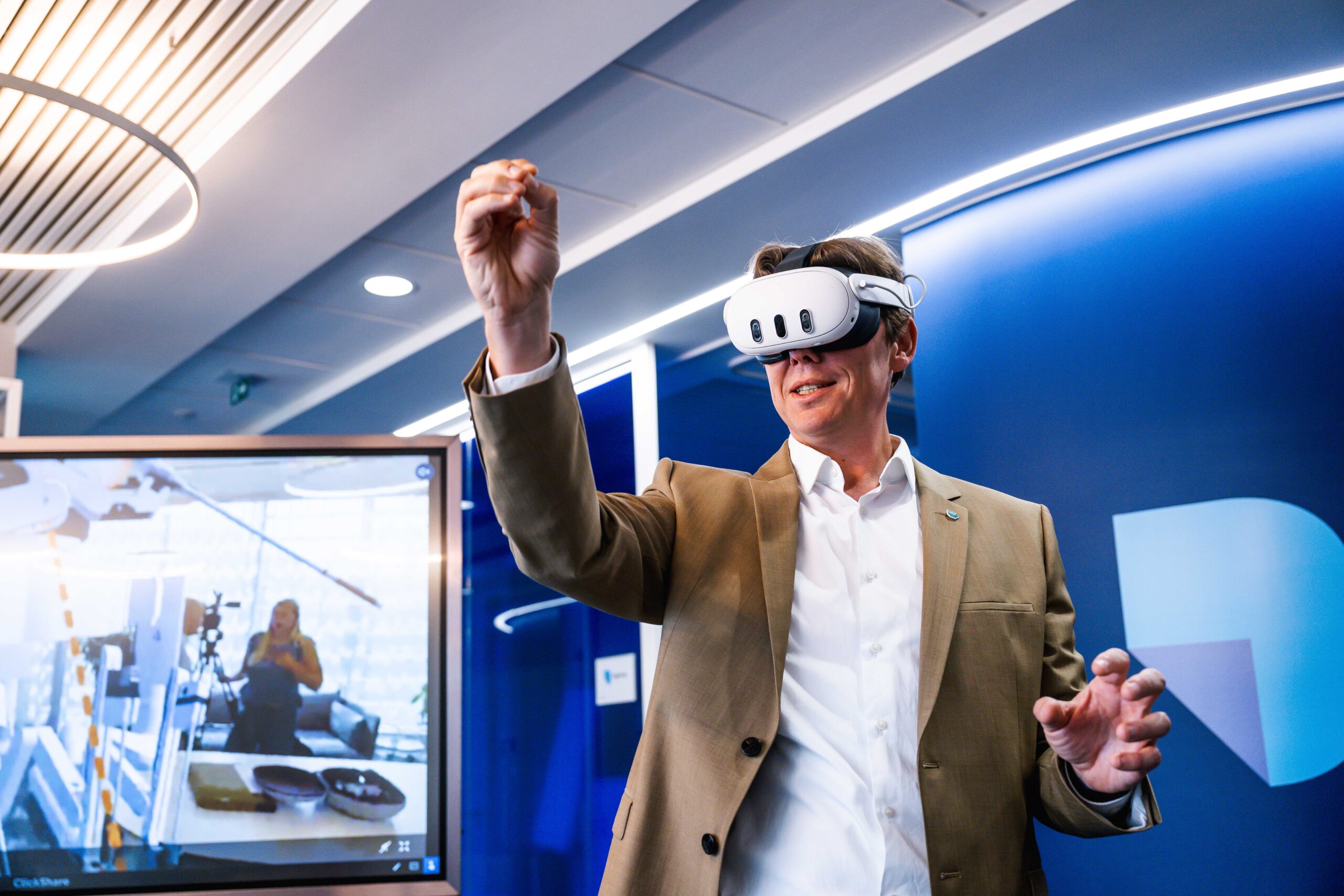
The Limburg-based company Toster is developing a virtual training program for OR nurses preparing to work with robotic surgery. Using XR technology, they can practice lifelike scenarios without the need for a physical surgical robot or operating room. The project is supported by POM Limburg’s XR Innovation Fund.
The fund was created to encourage Limburg SMEs to start working with Extended Reality. “We want XR in Limburg to go beyond demos and experiments,” says Tom Vandeput, Provincial Deputy for Economy and Chairman of POM Limburg. “The technology is there, but workplace applications often lag behind. That’s why we give companies a push. Toster’s project perfectly shows what’s possible when businesses and knowledge institutions join forces.”
Realistic Scenarios Without Workplace Pressure
The XR training focuses on the use of the DaVinci robot, a surgical system where the doctor performs extremely precise operations via robotic arms. This technology is being deployed in more and more hospitals, but it also requires specialized training for the OR team. The physical availability of such a robot is limited, and training programs are often intensive in terms of time and staff. The virtual environment provides an alternative that is both scalable and flexible. “Thanks to this XR tool, we can better prepare our OR teams for robotic surgery—faster, safer, and with more confidence,” says Prof. Dr. Joep Knol, abdominal surgeon at Ziekenhuis Oost-Limburg and advisor to the project. “The simulations are lifelike and allow practice of rare or high-risk situations without any impact on patients or care planning.”
XR as a Lever for Quality in Healthcare
The project is a collaboration between Toster, UHasselt Digital Future Lab, and PXL Healthcare. By combining technological know-how with medical expertise, the result is an XR solution that can be implemented immediately in practice. “Our role is to technically translate complex workflows like those in an operating room into an intuitive virtual environment,” says Jasper Olaerts of Toster Software. “XR not only allows procedures to be visualized, but also to be walked through and understood step by step. That makes it a powerful learning tool.”
Wide Range of Applications
Alongside Toster, three other projects were selected in the fund’s second call. AlterEyes, together with PXL, is developing an AI-driven tool for customized safety training for SMEs. Bimefy is using XR for digital construction site monitoring, in collaboration with UHasselt-DFL and several construction companies. Recovery Grid, meanwhile, focuses on motivating rehabilitation through interactive hand and brain training exercises.